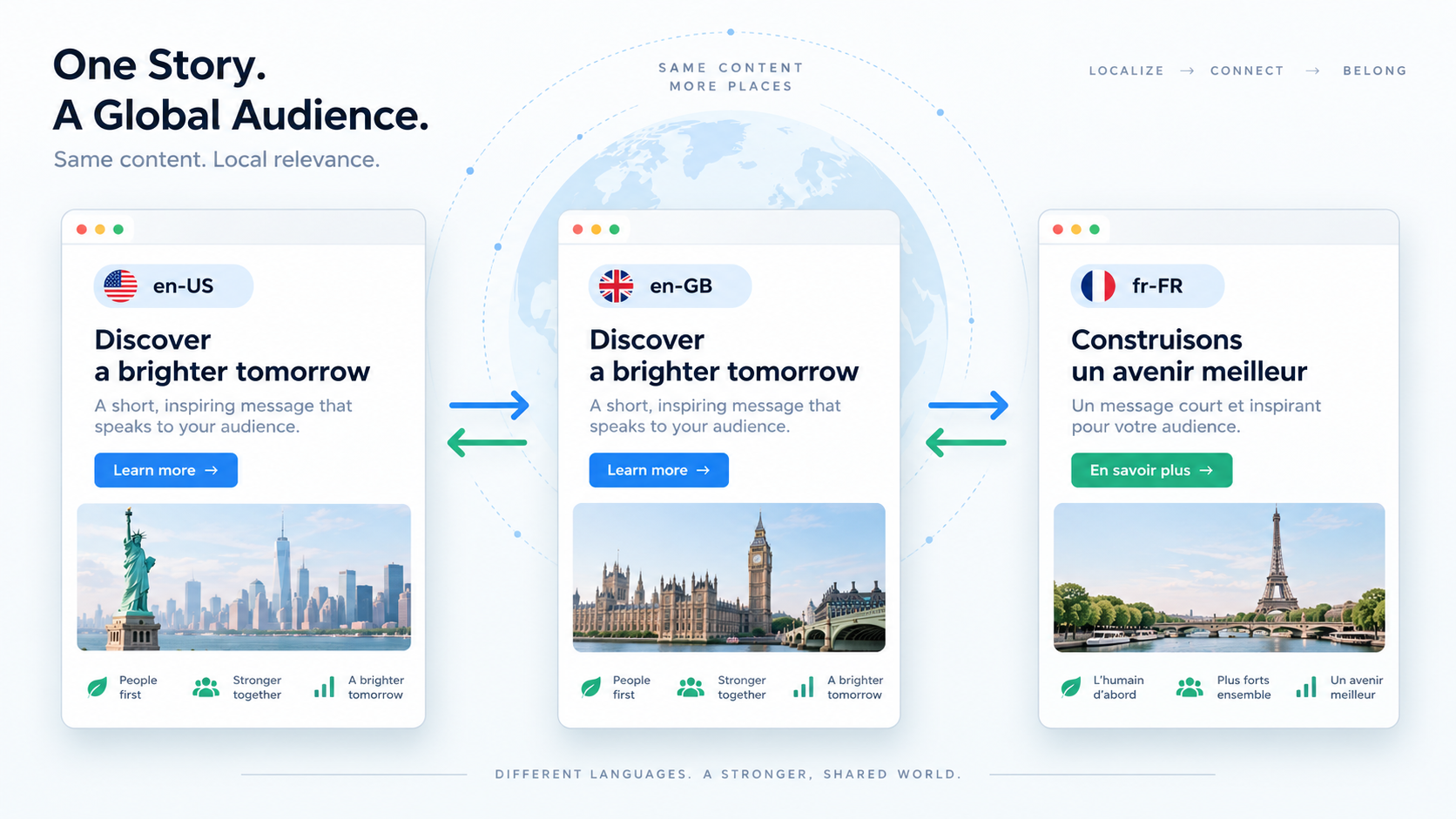
hreflang helps search engines understand that several URLs are localized alternatives for different languages or regions. The difficult part is not writing one tag—it is keeping the whole cluster consistent and reciprocal.
Language first, optional region second
Values typically identify a language and can optionally refine it with a region, such as en or en-GB. Do not invent market codes that are not valid language/region combinations. Use regional targeting only when the content genuinely differs for that audience.
Every alternate should reference the cluster
A robust setup includes self-references and reciprocal references among alternate pages. If page A points to page B but B does not point back, search engines may ignore that relationship.
Use full crawlable URLs
Generate the markup with Hreflang Generator using the canonical absolute URL for each variant. Avoid mixing HTTP/HTTPS, www/non-www, redirected URLs, or tracking parameters inside the same cluster.
Canonical and hreflang should agree
Localized pages that are genuinely distinct alternates typically need self-consistent canonicals. Canonicalizing every language version to one language can undermine the alternate-language setup. Use Canonical Tag Generator to keep the preferred URL explicit per page.
x-default is a fallback, not a language
x-default can identify a generic selector or fallback page when no specific language/region target fits. It does not replace properly tagged localized variants.
Scale with one source of truth
For many locales, generate annotations from structured localization data rather than hand-maintaining dozens of tags. Hreflang can also be expressed through XML sitemaps; whichever method you choose, avoid conflicting implementations.
FAQ
Do I need a country code for every language?
No. Use just the language when one page serves speakers broadly. Add a region only when it reflects a real targeting distinction.
Can two English regional pages be alternates?
Yes, when they are intended for different regions and the signals are implemented consistently.
Practical next step
Use Hreflang Generator to create a cluster, then audit reciprocity and canonical consistency across every URL in that cluster.
Audit clusters after publishing
A generated tag set can be correct on day one and broken a month later when one locale moves, redirects, or is unpublished. Periodically crawl representative clusters and verify that every alternate returns a successful response, carries the expected canonical, and still links back to the other members. International SEO failures are often consistency failures rather than syntax failures.