Confirm the algorithm first
A SHA-256 digest and a SHA-512 digest have different lengths and are not comparable. Release pages may publish several algorithms. Label the expected value before copying it and configure your checksum tool to compute the same one.
Normalize presentation, not content
Hexadecimal A-F versus a-f usually represents the same digest value. Surrounding spaces or a sha256: label may need to be excluded from the comparison. Do not remove or reorder actual hex digits.
Use exact comparison
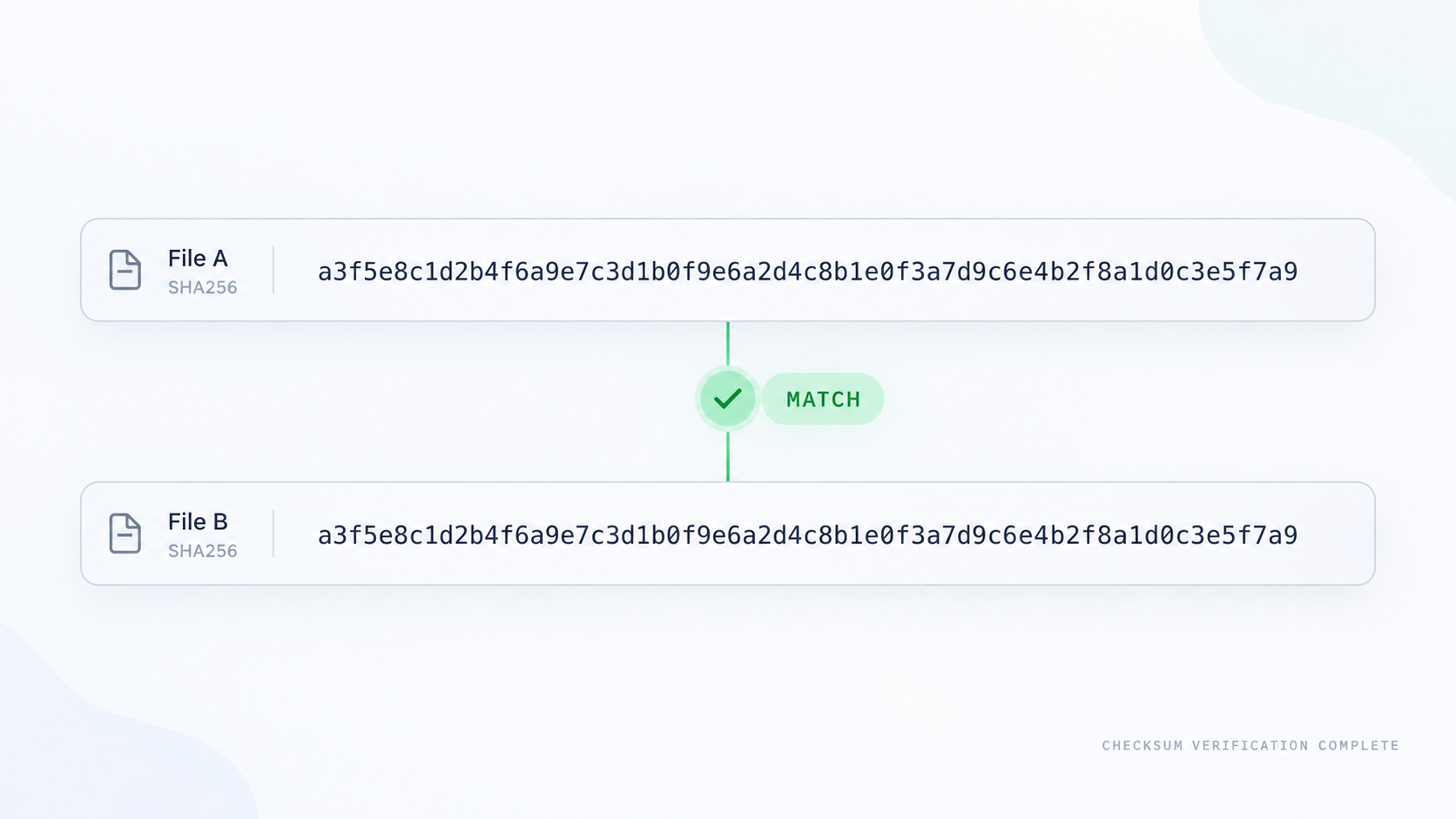
Paste the two values into Hash Compare instead of scanning them by eye. Exact comparison avoids transcription errors and makes a one-character mismatch obvious.
If a file checksum mismatches
Recompute the digest from the original downloaded file with File Checksum. Confirm the filename/version, algorithm, and whether the publisher hash refers to the archive or an extracted file. Redownload from the trusted source if necessary.
If a text checksum mismatches
Check for a trailing newline, line-ending conversion, Unicode normalization, or invisible whitespace. Text Checksum compares the text representation it receives, so visually identical content is not always identical input.
Do not “fix” a mismatch
If integrity matters, a mismatch is information. Do not edit the expected digest or accept a near-match. Resolve why the bytes differ and obtain a trustworthy expected value.
FAQ
Does hexadecimal case matter?
For a hex-encoded digest, uppercase and lowercase letters normally represent the same numeric value. Tools often normalize case automatically.
Can I compare hashes from different algorithms?
No. Compute the same algorithm over the same input on both sides.
Practical next step
Use Hash Compare for the exact digest comparison, then investigate the input and algorithm rather than treating a near-match as good enough.
A good comparison record
For release verification, save the filename, algorithm, expected digest, calculated digest, and source of the expected value together. That small record makes later troubleshooting much easier than a screenshot containing two unlabeled strings. If a vendor republishes an artifact under the same filename, the version and retrieval date can also matter.